Invest in a Painting by Britt Boutros-Ghali - Fractional Offering October 16th / Offering of a Photograph by Formento + Formento
Dear Friends,
On October 16th, we will release an offering of a diptych by Britt Boutros-Ghali. Works by Britt have a CAGR of 67.92%. The Timeless Investments platform will be the underwriter.
Britt Boutros-Ghali
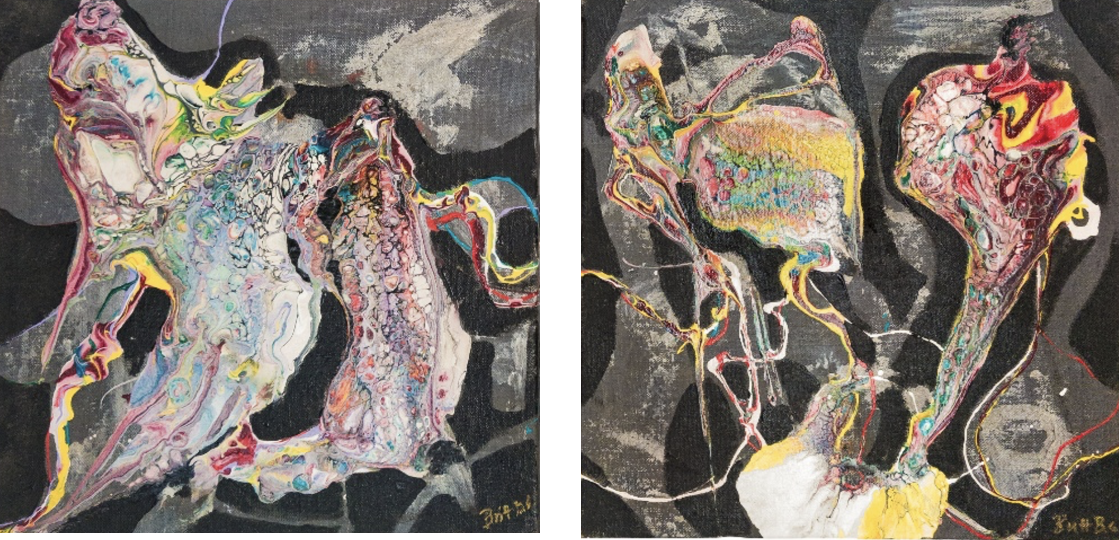
Britt Boutros-Ghali
Untitled (No 02/03-024), 2024
Acrylic on canvas
40 x 80 cm total (40 x 40 cm each) - diptych
Britt Boutros-Ghali is one of Egypt’s most celebrated contemporary artists and a world-class talent, following the tradition of abstract expressionist giants such as Helen Frankenthaler, Joan Mitchell, and Franz Kline.
Boutros-Ghali was born in 1937 in Svolvaer, in the Northern part of Norway, where the saturation of light in the summer was juxtaposed with its lack in winter. She endured the harsh weather and daunting pressure of the Second World War. This emotional backdrop provided a fertile landscape for her bursting, colorful, and emotional work.
Boutros-Ghali’s prolific career spans over six decades and includes both abstract and figurative works. Her paintings are charismatic and bold—exuberant celebrations of life, spirit, and dreamlike visions. Her practice is grounded in a sustained dialogue between intuition and discipline. Texture and color are layered and poured, building illuminating surfaces that feel both intentional and instinctive. Pigment pools, settles, and breathes across the canvas, creating compositions that hold light, movement, and the viewer’s attention in quiet balance.
Offering of a photograph by Formento + Formento
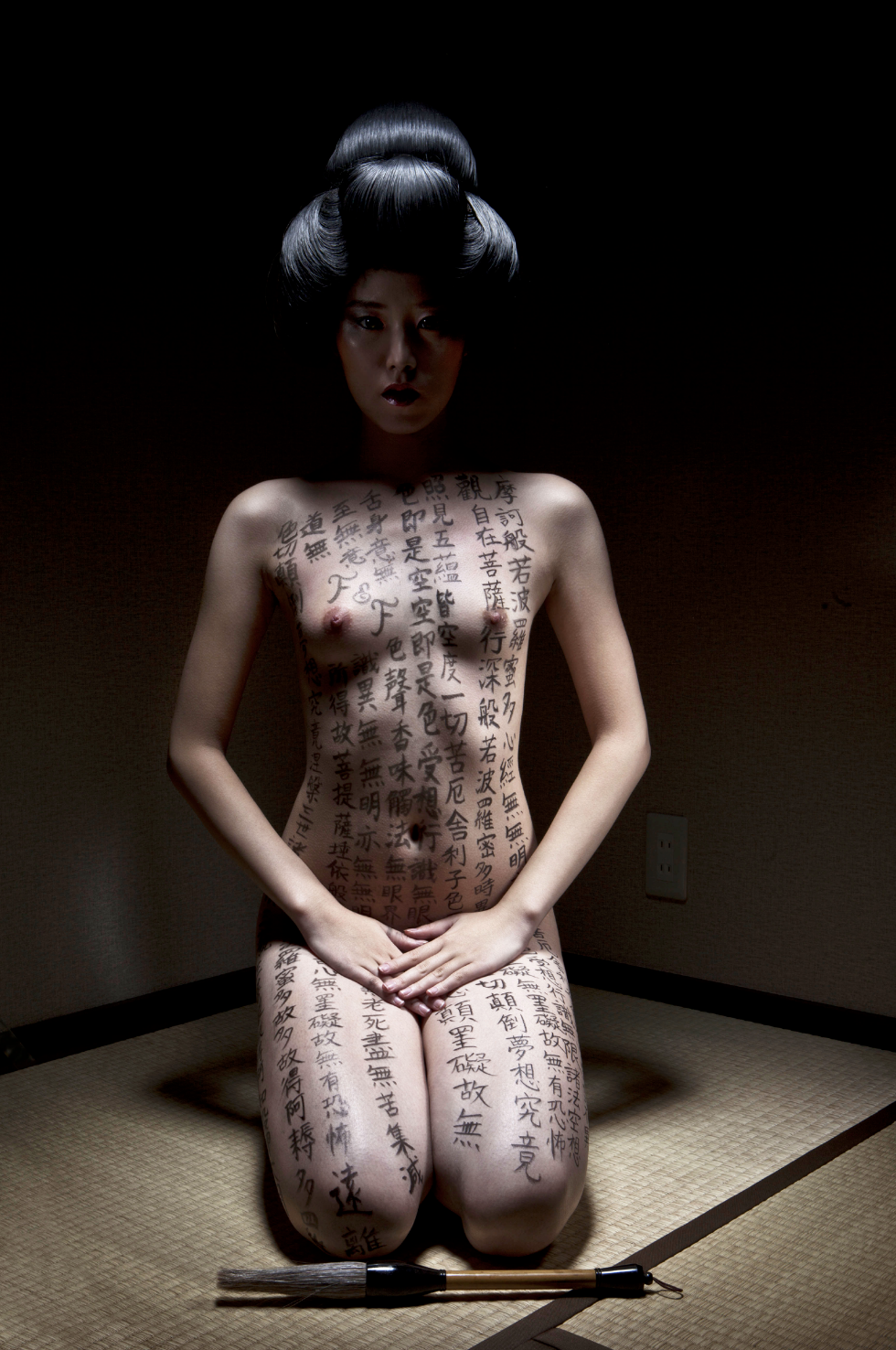
Formento + Formento
The Japan Diaries: Quorra XXV, Akasaka, Japan, 2013
Archival Pigment Print
40 x 60 in (101.6 x 152.4 cm)
Edition: 5/7 + 2 AP
Price: 14,000 EUR
Formento + Formento is a photographic duo formed by BJ Formento, born in Hawaii in 1964 and raised in the Philippines, and Richeille Formento, born in London in 1975. BJ studied photography at the Academy of Art University in San Francisco before moving to New York in 1999, where he developed his practice while working alongside established photographers, including Richard Avedon, Mary Ellen Mark and Annie Leibovitz. Richeille studied graphic design at Central Saint Martins in London before pursuing a career in fashion as an art director and designer. The two met while working on a photographic assignment in Miami in 2005 and subsequently established a collaborative practice that combines their respective expertise in photography, lighting, styling and art direction.Working across fine-art photography and cinematic visual storytelling, Formento + Formento create meticulously staged images that explore desire, memory, identity and the relationship between fiction and reality. Their photographs draw on the visual language of cinema, fashion photography and historical imagery, using carefully constructed settings, evocative lighting and expressive colour to create scenes that appear suspended between a real moment and an imagined narrative. Each project develops from an engagement with a particular place or culture, resulting in distinct bodies of work produced across the United States, Cuba, Mexico, India and Japan. Their major series include Circumstance, Japan Diaries, She Is Cuba and Hysteria.The duo has exhibited internationally at galleries, photography festivals and art fairs, including Fahey/Klein Gallery in Los Angeles, Robert Klein Gallery in Boston and Taylor | Graham in New York. Their work has also been presented at events such as Paris Photo, Photo London, AIPAD and The Armory Show. Their photographs are represented in institutional and museum collections including the International Center of Photography in New York, the Currier Museum of Art in New Hampshire, the Boca Raton Museum of Art in Florida, the Bruce Museum in Connecticut and the Musée des Arts décoratifs in Paris. In 2018, they were finalists for the Hasselblad Masters, further recognising their contribution to contemporary photographic practice.In Japan Diaries, Formento + Formento construct a cinematic vision of Japan through highly staged, theatrical compositions that draw on 1950s Japanese cinema, the photography of Nobuyoshi Araki and Daido Moriyama, Edo-period ukiyo-e woodblock prints, and the erotic imagery of Ero Guro art. Initiated in 2013, the ongoing series reflects the duo’s fascination with the country’s cultural complexity, its distinctive subcultures, and the interplay between historical traditions and contemporary life.OF SPECIAL INTEREST TO ME AS I LAUNCHED BASQUIAT’S FIRST EUROPEAN MUSEUM RETROSPECTIVE AT FAE MUSÉE D’ART CONTEMPORAIN TO WHICH BRUNO BISCHOFBERGER CONTRIBUTED EXTENSIVELY (1993)
AE
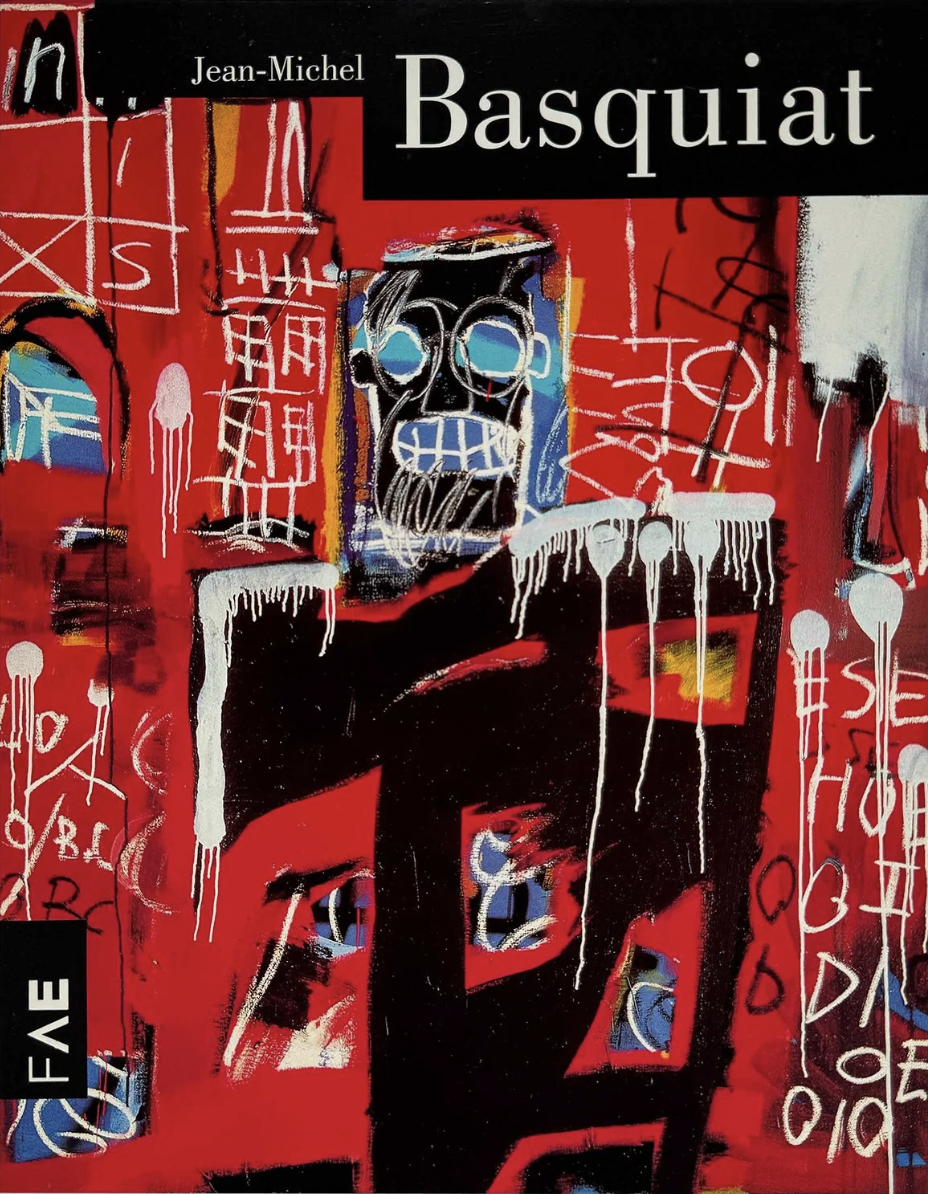
Basquiat’s Former Dealer on the Making of an Art World Icon
The late Swiss dealer and collector Bruno Bischofberger reflects on Basquiat's enduring power in this excerpt from a forthcoming Assouline volume.
by Bruno Bischofberger & Silvia Sokalski
Artnet, May 12, 2026
When we were invited to contribute a few words to this book, we realized that this is a project that goes beyond an overview or a specific aspect of Basquiat’s multifaceted art, executed in a few short years. Sixty-six years after his birth and 38 years after his premature death, his short but incredibly intense life had an impact on his generation and those that followed. Without his contribution we cannot imagine today’s art world. The development of globalization and digitalization—along with a growing cultural focus on distinct identities and exceptional individuals—has helped spread his influence well beyond the art world.
Artists who become part of art history are pioneers, as they change our idea of what art should and could be and how it should be viewed. Not only did Basquiat shift our understanding of art, he also shifted our perception of history and society in general. His work has become part of our visual memory but also provides insights into unnoticed collective memories. By merging images, symbols, and words, he perhaps wasn’t so much telling stories as he was retelling history or facts.
Cy Twombly once said that his own work leaves room for interpretation—as stories generally do. Jean-Michel’s work, in contrast, does not really do that, even though we think so and we occasionally still drive ourselves nearly crazy trying to interpret and understand. Instead, he bluntly shows us his facts, topics, and opinions—as little children do in their drawings, without the influence of a trained visual memory. Either we understand what we see or we don’t, whether we want to know his truth or we don’t.
This also stands in clear contrast to his older friend Andy Warhol, an artist who profoundly influenced not only Jean-Michel but an entire generation of artists and their successors up to the present day—the art age of “digital historicism,” as we call it. Yet despite Warhol’s impact, Jean-Michel’s artistic approach, with its critical engagement with politics and racism and its distinct expressive force, differed markedly from Warhol’s.
The younger artist was totally taken in by a person who was ahead of his time, who was white and did not have to fight for his rights. Warhol could just unemotionally express the beauty of art, without being critical or political, avoiding any meaning. He was mainly committed to art and style, processing the human output of his time—influenced by new technology, mass media, celebrity culture, globalization, commercialism, and digitalization—a time of rapid change, with endless possibilities and excesses. To reach Warhol’s level of historical importance, Jean-Michel had to establish his role and mission as an artist on a different level.
First major U.S. Marcel Duchamp survey in 50 years opens at Philadelphia Museum of Art
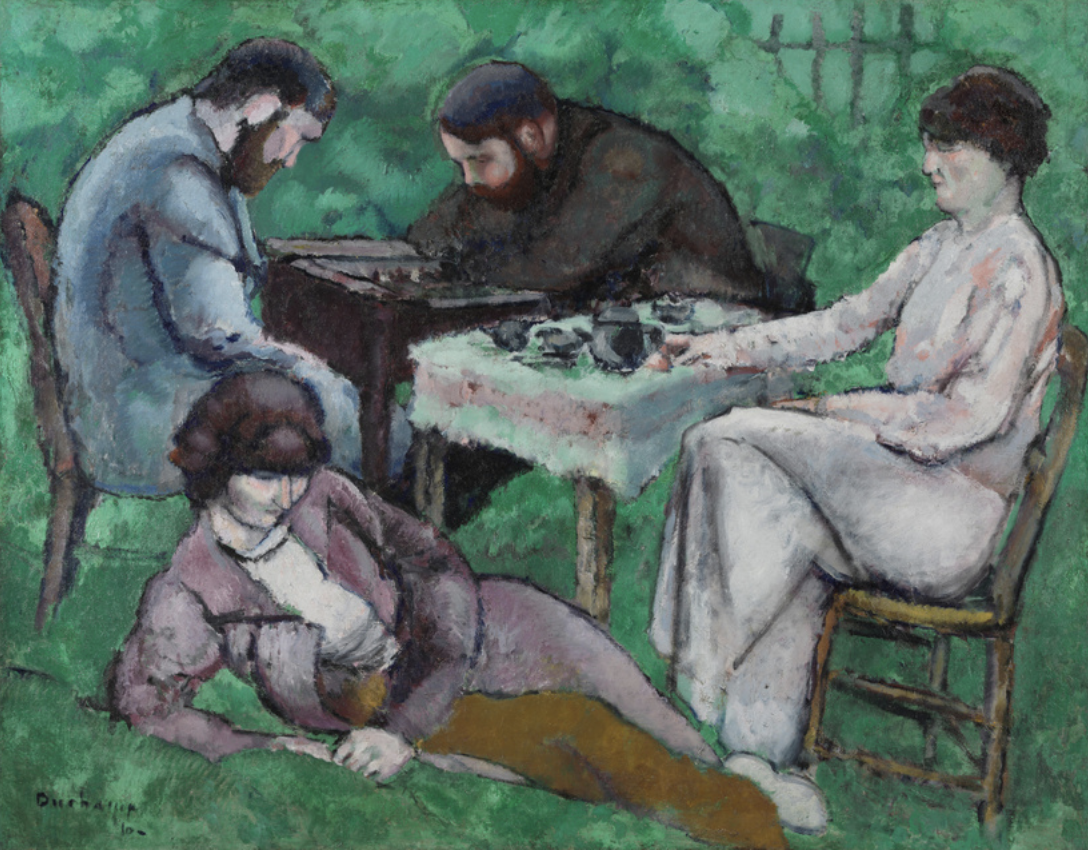
PHILADELPHIA, PA.- The Philadelphia Museum of Art is presenting the first major U.S. retrospective in more than 50 years dedicated to the work of Marcel Duchamp (1887–1968). On view in the Dorrance Galleries from October 10, 2026–January 31, 2027, the exhibition features a chronological display of approximately 300 works from a career spanning painting, drawing, sculpture, photography, film, printed matter, and the unclassifiable works known as readymades.
The last major U.S. Duchamp survey took place in 1973–74, co-organized by the PMA—home to the world’s largest Duchamp collection—and The Museum of Modern Art (MoMA) in New York. Co-organized by the same two institutions, this exhibition will reappraise an oeuvre that transformed the very idea of what art could be.
“We are delighted to join forces once again with The Museum of Modern Art to present an ambitious retrospective of Marcel Duchamp’s work,” said Daniel Weiss, the George D. Widener Director and Chief Executive Officer, PMA. “Remarkably, Duchamp himself played a key role in guiding the distinguished art collection of Louise and Walter Arensberg, his principal patrons, to the PMA as a gift in 1950. That act made Philadelphia the artist’s permanent home, and today, the PMA holds the world’s most significant assembly of works by Duchamp—comprising some two hundred paintings, sculptures, and works on paper, as well as the most extensive archives relating to the artist’s life and work.”
“When, in 1913, Duchamp produced the first readymade, making use of ordinary, mass produced, commercially-available items, he defied fixed beliefs about the nature and definition of art itself. He also brought forth new ways of being an artist,” said Matthew Affron, the Muriel and Philip Berman Curator of Modern Art, PMA. “This retrospective will reintroduce contemporary audiences to Duchamp’s complex ideas, his elusive personae, and his revolutionary approach to making art.”
The Lucas Museum of Narrative Art makes room—and lots of it—for murals by Banksy, Baca and others
From rare interventions by Banksy to monumental images by JR and Diego Rivera, and preparatory sketches by Judy Baca, the museum frames muralism as public storytelling
Art Newspaper, 9 October 2026
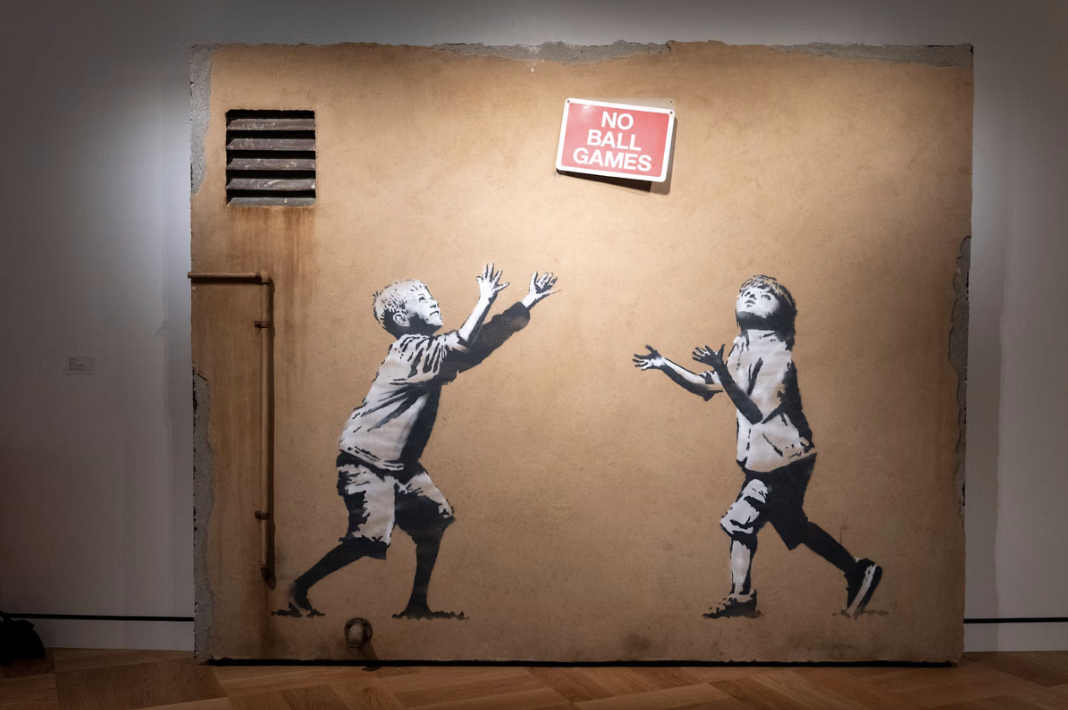
On the top floor of the new Lucas Museum of Narrative Art, which opened to the public last month, is a gallery some visitors might miss, partly because they have just explored the many galleries on the second floor below, and partly because they have to find just the right elevator to get there. This gallery is devoted to murals, not a typical category for an art museum but fitting for a city amply dotted with murals.
Perhaps more unexpected is the gallery’s prevalence of art that is overtly political in ways the rest of the museum largely skirts. Take the huge reproduction of Diego Rivera’s 1933 magnum opus for Rockefeller Center in New York to the right as you enter, very pro-worker and somewhat anti-capitalist—so much so that Nelson Rockefeller had it demolished and Rivera subsequently created a smaller version in Mexico City, on which this reproduction is based.
In the adjoining gallery are 12 works by the British street art prankster Banksy. The fact that these works—some reproduced in Banksy’s studio and two on loan—are in an institutional setting at all is unusual, as the anonymous artist has generally avoided museum shows. Information about his contributions to the museum was so closely guarded that most museum staff did not know what would fill these spaces until the media preview.
Though Banksy has long worked anonymously, speculation about his identity has been widespread for decades—earlier this year, an extensive Reuters investigation that identified him as Robin Gunningham, a conclusion reached by some previous investigations. In an interview with The Art Newspaper, the Lucas Museum’s chief executive Tracey Bates could not explain how Banksy’s works got to the institution.
“He’s an incredible living artist of our time, but an incredibly elusive artist,” she says. “I would say that George has always been a huge advocate for muralists all around the world, and he’s always been a big fan of Banksy. So it’s been a real meeting of minds with the two of them.” (A recent Wall Street Journal profile revealed that Banksy’s work played a central role in Lucas’s courtship of the executive Mellody Hobson, to whom he is now married and with whom he co-founded the museum.)
What the World’s Top Collectors Bought in 2026, From a 15th-Century Pietà Painting to an Oar from Lubaina Himid’s British Pavilion
By Maximilano Duron
Artnews, October 6, 2026 8:00am
Each year, we ask the Top 200 Collectors for an update on what they’ve purchased in the past 12 months. The answers always surprise us. Among the highlights that they shared are a 15th-century Pietà by a Follower of Rogier van der Weyden, a complete set of Robert Frank’s The Americans, a wearable work of art by Alexander Calder, and a poignant Hale Woodruff painting. There’s also a lot of purchases of contemporary artists, including Robert Gober, Carol Bove, Jeremy Frey, Jennifer Packer, and Kerry James Marshall, whose triptych commissioned for his recent National Gallery show in London was also snapped up. Who exactly bought these works? Find the answers below.
Ariel Marcelo Aisiks
In addition to acquiring the archives of performance artist Lea Lublin and the New York branch of the Galería Bonino, Ariel Marcelo Aisiks completed his acquisition this past year of a set of Nelson Leirner’s Homenagem a Fontana I–III (1967), which took him over 10 years to assemble. “I now consider [it] a personal trophy,” he said, adding that the acquisition of Mariette Lydis’s 1926 illustrated book Lesbiennes is another type of trophy. “This is not simply a rare book. It is evidence of artistic courage, survival, and process.”
Laurent Asscher
Two recent purchases by Laurent Asscher include Ed Ruscha’s Venezia, Venice (2026) and Joseph Yaeger’s 2025 mixed-media portrait Clean Windows Kill Birds.
Allison and Larry Berg
Robert Gober’s 1992 Untitled (functioning sink) recently entered the collection of Allison and Larry Berg, who had “quietly coveted a Gober sink for decades,” they said. “We finally acquired the work because the longing simply wouldn’t dissipate, and because Bob’s practice has inspired so many of the themes explored by other artists in our collection. There was a hole in our story without a Bob Gober sink. In a collection devoted to work that gives voice to underrepresented individuals interrogating their own culture, identity, and sociopolitics in ways that were groundbreaking for their generation, that absence had become impossible to ignore.”
SPLINT / MADDOX
Some of you who had invested in offerings through Splint have requested an update as to the status of your investments. M&A Arts retains possession of the art and nothing can transact or move without our agreement. We intend to retain possession to be certain both artists and investors are the sole consideration at all times.
Splint / Maddox seems to have taken the path of sourcing most, if not all, art offerings from the Maddox Gallery. Splint (Mark Investment) has announced a planned secondary sale of shares by present owners. We believe the names of the selling shareholders will be released on October 15th.
Though we have discontinued all transactions with Splint, we continue to monitor the situation with a view towards tracking Splint's valuations of artworks in which any of us may have an interest, especially as to the Splint Marketplace. We will update you from time to time and are available. ChatGPT seems to have a rather extensive analysis of the Splint/Maddox operations - past and present for those of you who are interested in researching futher.
Asher Edelman